
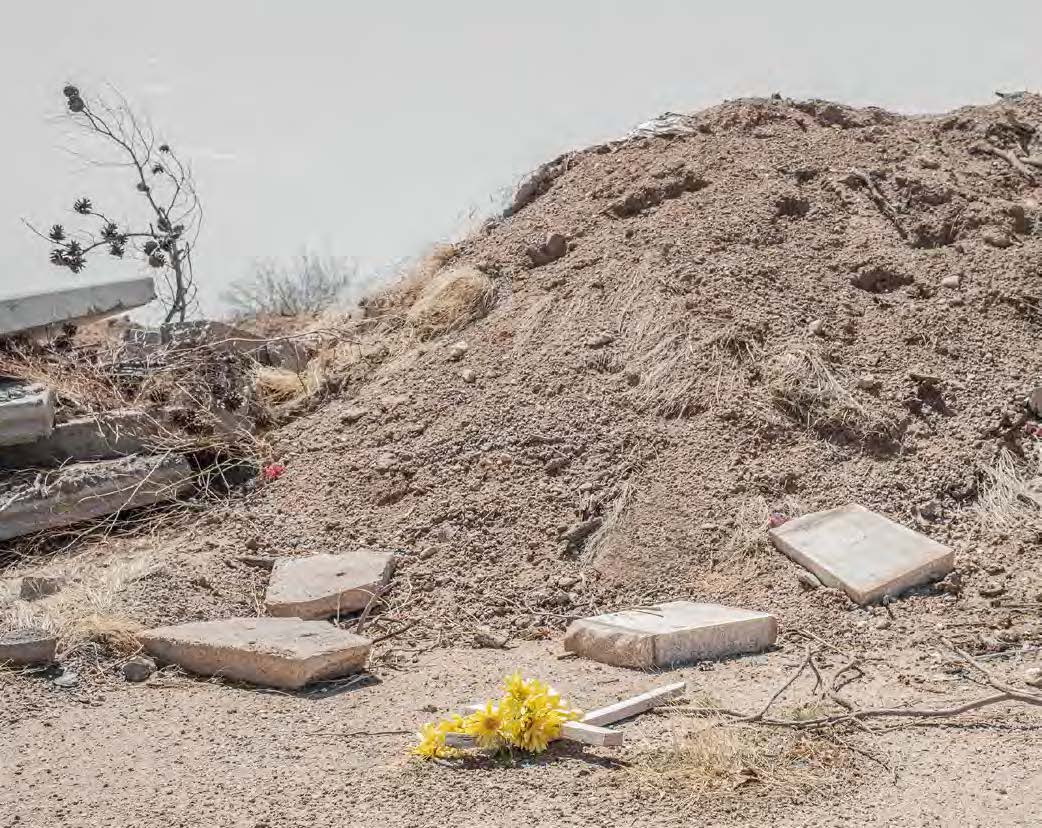
Holy Hope Cemetery (founded in 1907 in Tucson, Arizona) was the city’s first Catholic cemetery that was not directly a part of a parish. The upkeep of the graves used to depend on the families of the deceased, but over time the state diocese took on the commitment. With all this, structural inequality and neglect have progressively deteriorated the cemetery.
It is currently divided into two clearly differentiated sectors. On the one hand, the northwest sector (the historic core of the complex), where the remains of Mexican citizens are buried. There are signs of neglect, with graves without tombstones, levels of uncleanliness and a disrespectful use of the space. It is known locally as “the place of the forgotten”, and contrasts with the second sector, the southeast, set aside for well-off families. This division symbolises a social frontier that transcends mere architecture.
Without knowing the history of the cemetery, in 2022 I had the chance to explore it. I documented its state of repair and life through a photographic project, The American Dream, which sets out to retrieve and showcase the memory of the Mexican heartland of Holy Hope Cemetery. Some of these photographs were exhibited in 2025 in Almería (Spain) and were well received, despite the modesty of the exhibition.
However, it is paramount to continue sharing the reality of this architecture until another one can ultimately be related and portrayed. This visual essay reveals Holy Hope Cemetery as a wounded landscape and calls for its repair.
Cover Image: Mass grave